

Fleet Management
From yards to hangars: verified execution in the field.
What Success Looks Like in
Fleet Management
Safer operations, fewer disruptions, and proof of execution across every fleet type.
Vehicles are consistently safe, inspected, and ready for service (with verification)
Less downtime through preventative maintenance that actually gets done
Faster defect resolution with clear ownership and escalation
Standardized execution across depots, yards, routes, hangars, and terminals
Audit-ready records for inspections, maintenance, and compliance, by asset and date
Better coordination between operations, maintenance, and third-party vendors

The Operational Roadblocks
Where multi-vehicle fleets lose time, money, and control.
Paper or spreadsheet checks that get missed, rushed, or backfilled
Inconsistent inspection routines across operators, shifts, and sites
Defects reported late (or not at all), with unclear follow-through
Limited visibility into asset readiness across mixed fleets (cars, trucks, rail, air)
Vendor work that’s hard to verify and even harder to audit
Managers stuck chasing updates instead of managing by exception

How Command Center Solves It
One mobile-first system to digitize and verify frontline execution, no matter what you operate.
Digitize inspections and SOPs by fleet type (car, truck, trailer, rail car, locomotive, aircraft, ground equipment)
Tie work to the specific asset: VIN/serial, unit number, tail number, railcar ID, etc.
Verify completion with a real-time audit trail (who/when/where + notes/photos)
Turn defects into action automatically: log → triage → assign → fix → verify
Escalate instantly when a check fails or a vehicle is flagged “out of service”
Standardize maintenance procedures and track proof of work, internal teams or vendors
Monitor readiness live across sites with dashboards and “manage-by-exception” views
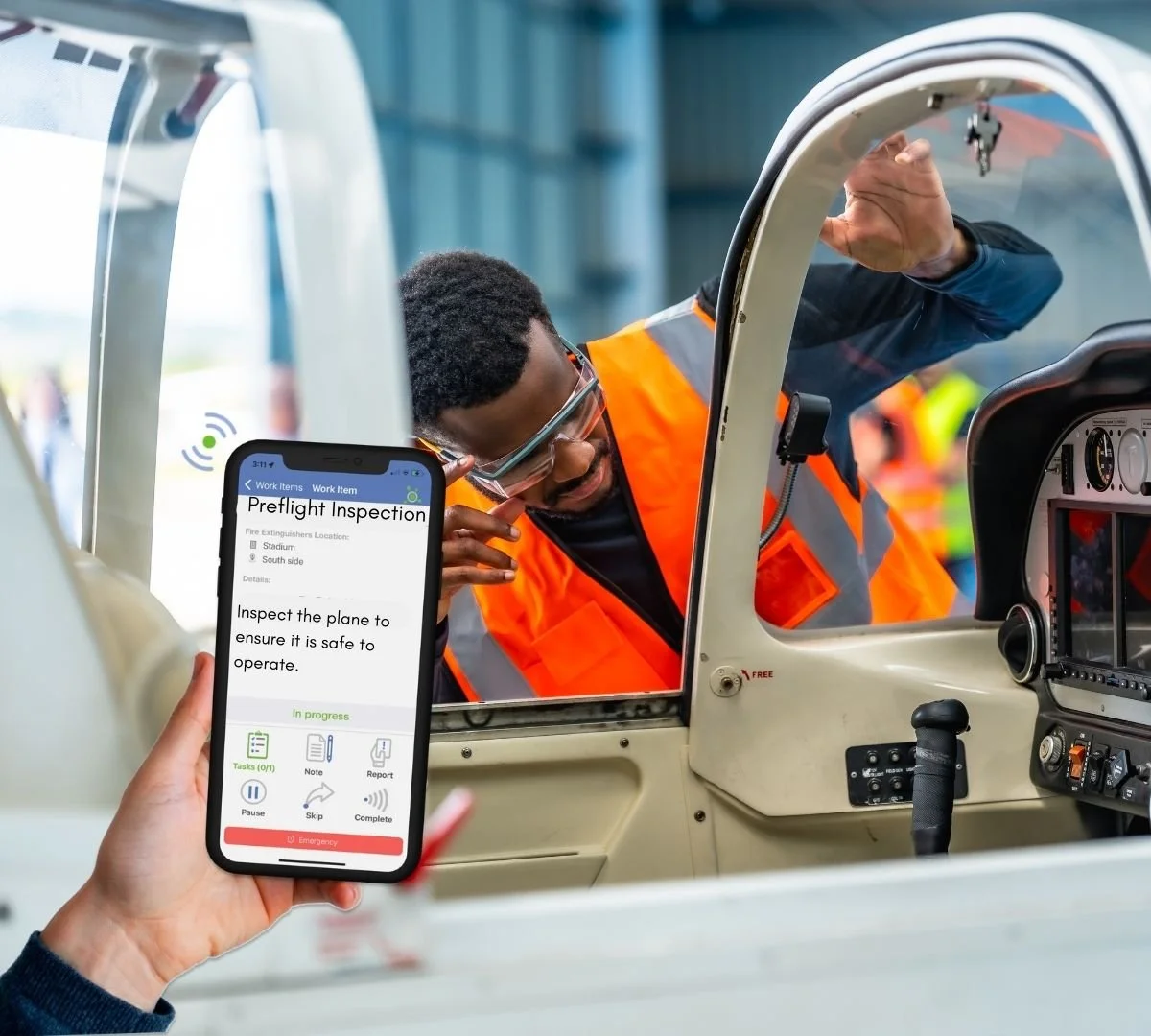
Common Fleet Management Workflows
Pre/Post-Trip Inspections
(lights, tires, fluids, brakes, safety gear)
Defect Reporting & Triage
(out-of-service flag, photo proof, route to maintenance)
Preventative Maintenance
(oil changes, filters, inspections by hours/km)
Safety & Compliance
(load securement, emergency kit, documentation readiness)
Equipment Readiness
(trailers, liftgates, reefers, forklifts/yard equipment)
Vendor & Shop Verification
(third-party repairs, service confirmation, closeout proof)
A Day in the Life, Transformed
What it feels like when fleet readiness is visible in real time.
Operators complete guided pre-use checks on mobile before vehicles go into service
Defects trigger immediate workflows to maintenance and supervisors—with context
Maintenance teams execute standardized fix procedures and close with proof
Supervisors see readiness by depot/yard/hangar and intervene early
Compliance pulls records instantly by asset, date range, defect type, or work order
The whole organization runs on one source of truth—from frontline to leadership
